
Refractory materials form the backbone of high-temperature industrial operations, yet their performance variability and market dynamics often catch procurement teams off guard. These specialized heat-resistant materials determine everything from furnace efficiency to maintenance schedules in steel mills, glass factories, and cement plants across Europe. Understanding their technical properties, thermal shock behavior, and pricing trends isn't just academic knowledge. It directly impacts your bottom line, operational uptime, and competitive positioning in manufacturing sectors where margins depend on process optimization and cost control.
Table of Contents
- Key takeaways
- What are refractory materials and why do they matter?
- Thermal shock resistance and performance factors in refractory materials
- Europe's refractory materials market and procurement considerations
- Practical buying guide: Selecting and sourcing refractory materials for industrial use
- Explore Borvanta's refractory materials and procurement support
- Frequently asked questions
Key Takeaways
| Point | Details |
|---|---|
| Industry importance | Refractory materials determine furnace efficiency, uptime, and maintenance schedules across high temperature industries. |
| Thermal shock factors | Thermal shock resistance depends on material heterogeneity and porosity control, guiding predictive design and quality testing. |
| European market growth | Europe's refractories market is growing rapidly, with price volatility linked to raw materials and energy costs. |
| Total cost of ownership | Procurement should prioritize total cost of ownership and include supplier benchmarks and contract strategies. |
What are refractory materials and why do they matter?
Refractory materials are engineered to retain strength and stability at high temperatures in industrial processes. They serve as protective linings in furnaces, kilns, reactors, and ladles where temperatures routinely exceed 1,000°C. Without these materials, modern steel production, glass manufacturing, and cement processing would be impossible.
Common refractory types include alumina-based products for general high-temperature applications, magnesia refractories for basic slag environments, silica bricks for acidic conditions, and carbon-based materials for extreme thermal shock scenarios. Each type offers distinct advantages based on chemical compatibility, thermal properties, and mechanical strength requirements.
Their ability to resist thermal shock, erosion, and chemical attack determines service life and efficiency. A refractory lining failure can halt production for days, costing manufacturers hundreds of thousands in lost output. The right material choice prevents unplanned downtime, reduces energy waste through better insulation, and extends maintenance intervals.
Selecting appropriate refractories affects operational stability beyond just the lining itself. Poor choices lead to increased heat loss, contamination of processed materials, and safety risks from structural failures. Procurement professionals must balance initial cost against performance longevity, understanding that premium materials often deliver superior total value through extended service life and reduced maintenance requirements. For comprehensive definitions of industrial materials terminology, technical resources help clarify specifications and application contexts.
Thermal shock resistance and performance factors in refractory materials
Thermal shock resistance measures a refractory's ability to withstand rapid temperature changes without cracking or spalling. This property becomes critical during startup, shutdown, and process upset conditions when temperature gradients create internal stresses. Materials that fail under thermal shock compromise furnace integrity and force costly emergency repairs.
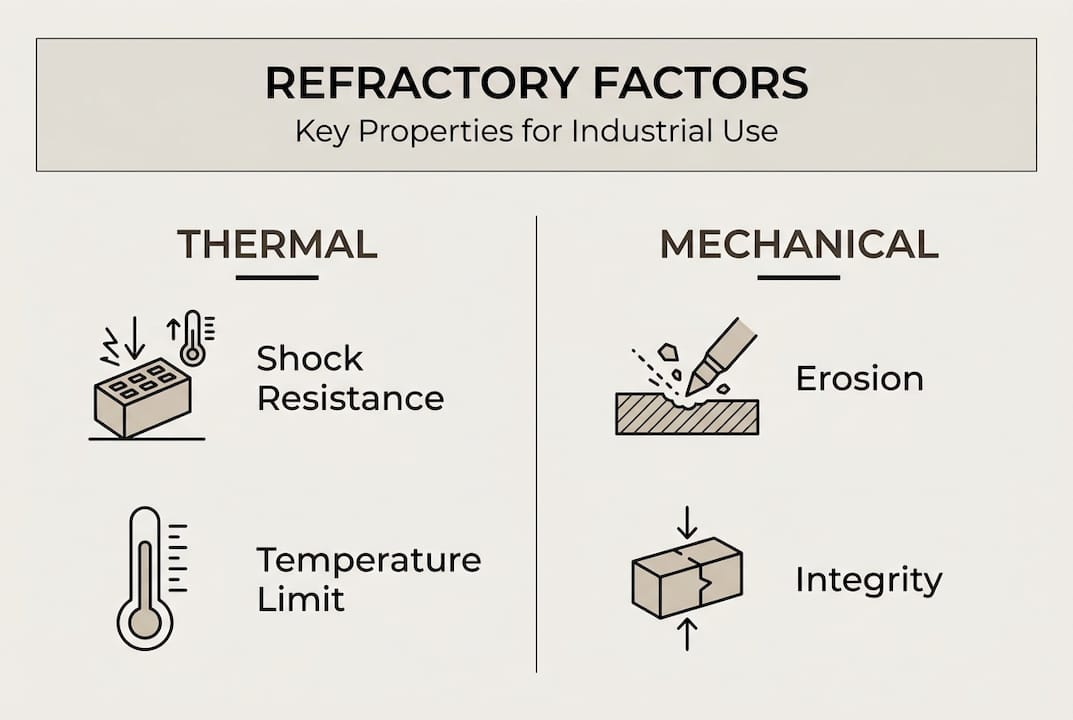
Conventional criteria like Hasselman parameters are limited for heterogeneous refractories. Traditional testing methods assume material uniformity, but real-world refractories contain multiple phases, grain sizes, and porosity distributions. Multi-scale finite element modeling (FEM) provides advanced predictions by accounting for microstructural complexity, stress concentrations at grain boundaries, and crack propagation paths through heterogeneous matrices.
Porosity control directly influences both mechanical integrity and thermal performance. Smaller, uniformly distributed pores improve thermal shock resistance by deflecting crack paths and reducing stress intensity at defect sites. However, total porosity must be balanced, as excessive pores weaken structural strength while too little porosity increases thermal conductivity and reduces insulation effectiveness. The optimal porosity range depends on specific application requirements and operating conditions.
Pro Tip: Optimize carbon content in MgO-C refractories to enhance thermal shock resistance while limiting oxidation risks. Carbon additions improve thermal conductivity and reduce thermal expansion mismatch, but excessive carbon creates oxidation vulnerabilities at high temperatures.
Specialized compositions deliver superior performance in demanding environments. In steel ladles, MgO-C with calcium magnesium aluminate (CMA) additives enhances slag resistance through in-situ spinel formation. The CMA reacts with magnesia to form magnesium aluminate spinels that block slag penetration and improve hot strength. Graphite content improves thermal shock tolerance but requires careful optimization to prevent excessive oxidation during service.
Key performance factors for refractory materials include:
| Property | Impact | Optimization Strategy |
|---|---|---|
| Thermal shock resistance | Prevents cracking during temperature changes | Control porosity distribution and grain size |
| Chemical compatibility | Resists slag and gas attack | Match refractory chemistry to process conditions |
| Mechanical strength | Withstands physical loads and abrasion | Balance density with thermal properties |
| Thermal conductivity | Affects energy efficiency and shell temperature | Adjust porosity and phase composition |
Europe's refractory materials market and procurement considerations
Iron and steel manufacturing dominates refractory demand in Europe with a 67% market share. These sectors consume vast quantities of basic refractories for blast furnaces, electric arc furnaces, and continuous casting operations. Glass, cement, and non-ferrous metals account for the remaining demand, each with specific material requirements and performance expectations.
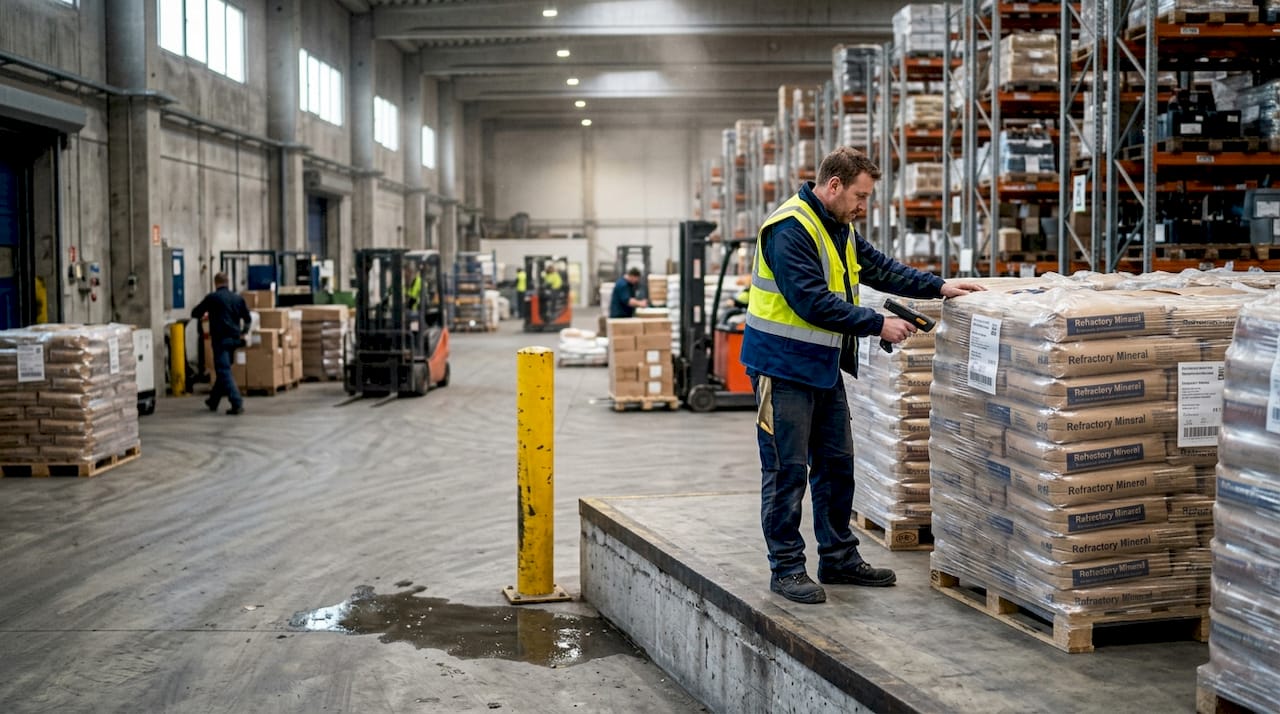
Market growth from $49.5B in 2025 to $118.2B in 2035 reflects increasing demand for engineered refractory products. Manufacturers seek materials that deliver longer service life and lower total cost of ownership rather than simply the lowest unit price. This shift toward value-based purchasing creates opportunities for procurement teams to negotiate performance guarantees and service-based contracts.
Pricing volatility stems from raw material costs and energy expenses. Alumina and magnesia prices fluctuate with bauxite and magnesite mining economics, while energy-intensive manufacturing processes expose refractory producers to electricity and natural gas price swings. European energy market dynamics, particularly renewable energy integration and carbon pricing mechanisms, add complexity to cost forecasting.
Strategic procurement approaches include:
- Negotiate long-term contracts with raw material price index clauses to share commodity risk
- Evaluate suppliers on full-life cost including installation, service life, and maintenance requirements
- Diversify sourcing across multiple suppliers and geographic regions to reduce supply chain vulnerabilities
- Build partnerships with technical service providers who offer application engineering and performance monitoring
Procurement benchmarks highlight the importance of supplier range and contract strategies. Leading procurement organizations maintain relationships with 3-5 qualified suppliers per material category, balancing competitive tension with partnership depth. They use performance scorecards tracking quality metrics, delivery reliability, and technical support responsiveness.
| Supplier Type | Contract Advantages | Risk Mitigation |
|---|---|---|
| Integrated producers | Stable supply, technical depth | Price premium, limited flexibility |
| Regional specialists | Application expertise, responsive service | Capacity constraints, narrower product range |
| Surplus stock platforms | Below-market pricing, opportunistic buys | Variable availability, requires technical validation |
Access to current offers in industrial stock provides tactical flexibility for managing inventory costs and testing alternative materials. Foundry procurement support services help evaluate technical fit and commercial terms for specialized applications.
Practical buying guide: Selecting and sourcing refractory materials for industrial use
Effective refractory procurement follows a structured evaluation process:
- Define application requirements including operating temperature, chemical environment, thermal cycling frequency, and mechanical loads
- Identify candidate materials based on technical specifications and proven performance in similar applications
- Request detailed technical data sheets, material safety information, and installation guidelines from potential suppliers
- Evaluate total cost of ownership incorporating purchase price, installation labor, expected service life, and maintenance requirements
- Conduct pilot trials or small-scale testing before committing to large-volume purchases
- Negotiate contract terms including pricing mechanisms, delivery schedules, technical support, and performance guarantees
Total cost of ownership analysis reveals the true economic impact of refractory choices. A material costing 20% more per ton but lasting 40% longer delivers superior value through reduced relining frequency, lower labor costs, and decreased production interruptions. Procurement professionals should prioritize total ownership cost, downtime impact, and energy savings when selecting suppliers.
Pro Tip: Use data-driven supplier scorecards incorporating quality metrics, delivery performance, technical responsiveness, and pricing competitiveness. Weight factors based on your operation's priorities, typically emphasizing quality and reliability over price for critical applications.
Negotiation tactics leverage market dynamics and relationship depth. Current market growth trends give buyers leverage to demand performance guarantees and service level agreements. Contract terms should include raw material price index clauses that share commodity risk fairly between buyer and supplier, protecting both parties from extreme price movements.
Best practices for managing price volatility:
- Lock favorable pricing through forward contracts during market softness
- Maintain strategic inventory of critical materials to buffer against supply disruptions
- Develop relationships with multiple sourcing channels including traditional suppliers and surplus stock platforms
- Monitor commodity price trends and adjust procurement timing accordingly
- Build supplier partnerships that provide transparency on cost structures and market intelligence
Common procurement pitfalls include:
- Focusing solely on unit price while ignoring lifecycle cost and performance differences
- Underestimating energy impact of refractory thermal properties on overall process efficiency
- Neglecting technical service and application engineering support that optimize material performance
- Failing to validate supplier claims through reference checks and trial installations
- Overlooking lead time requirements and supply chain risks in sourcing strategies
Explore refractory minerals offers that provide competitive alternatives to traditional sourcing channels. Platforms specializing in below-market industrial stock offer opportunities to test premium materials at reduced risk or secure tactical inventory during favorable market conditions.
Explore Borvanta's refractory materials and procurement support
Navigating refractory procurement complexity requires both technical knowledge and market access. Borvanta provides competitively priced refractory minerals and industrial materials tailored for European manufacturing sectors facing cost pressures and performance demands.

Their procurement support helps manage price volatility through access to surplus inventory at below-market pricing. This approach allows procurement teams to optimize total cost of ownership while maintaining quality standards and technical specifications. One-off stock opportunities provide flexibility to test alternative materials, build strategic inventory during favorable pricing periods, or secure specialized products for specific applications.
Pro Tip: Utilize Borvanta's industrial stock offers to access below-market pricing on quality refractory materials while diversifying your supplier base and reducing commodity price exposure.
Products include refractory minerals, foundry sands, and related industrial supplies with detailed technical documentation and flexible delivery terms. Foundry procurement support services help evaluate material fit and commercial terms. Their platform serves buyers across the Baltic region and selected European markets seeking competitive deals on surplus materials backed by transparent specifications and logistical support. Access below-market industrial stock opportunities that complement traditional sourcing strategies.
Frequently asked questions
What are refractory materials and their primary industrial uses?
Refractory materials are heat-resistant substances engineered to withstand extreme temperatures above 1,000°C while maintaining structural integrity. They serve as protective linings in steelmaking furnaces, glass melting tanks, cement kilns, and non-ferrous metal processing equipment where direct contact with molten materials and corrosive gases occurs.
How is thermal shock resistance tested and why is it important?
Thermal shock resistance testing involves rapid heating and cooling cycles to evaluate cracking and spalling behavior under temperature gradients. Advanced multi-scale finite element modeling now supplements traditional methods by accounting for material heterogeneity and microstructural complexity. This property determines refractory survival during process upsets and startup/shutdown cycles that create severe thermal stresses.
What factors drive price changes in refractory materials in Europe?
Raw material costs for alumina, magnesia, and other mineral inputs fluctuate with global mining economics and commodity markets. Energy expenses for high-temperature manufacturing processes vary with European electricity and natural gas prices. Carbon pricing mechanisms and renewable energy integration add volatility to production costs that suppliers pass through to buyers.
How can procurement teams hedge against raw material price volatility?
Negotiate long-term contracts with price index clauses that tie refractory costs to published commodity indices, sharing risk between buyer and supplier. Diversify sourcing across multiple suppliers and geographic regions to reduce dependence on single sources. Maintain strategic inventory during favorable pricing periods and explore surplus stock platforms for opportunistic purchases at below-market rates.
What are the top considerations when selecting a refractory materials supplier?
Evaluate total cost of ownership including purchase price, installation requirements, expected service life, and maintenance frequency rather than focusing solely on unit cost. Assess technical support capabilities, application engineering expertise, and performance guarantee terms. Verify supply chain reliability, quality consistency, and responsiveness to urgent requirements through reference checks with existing customers in similar applications.