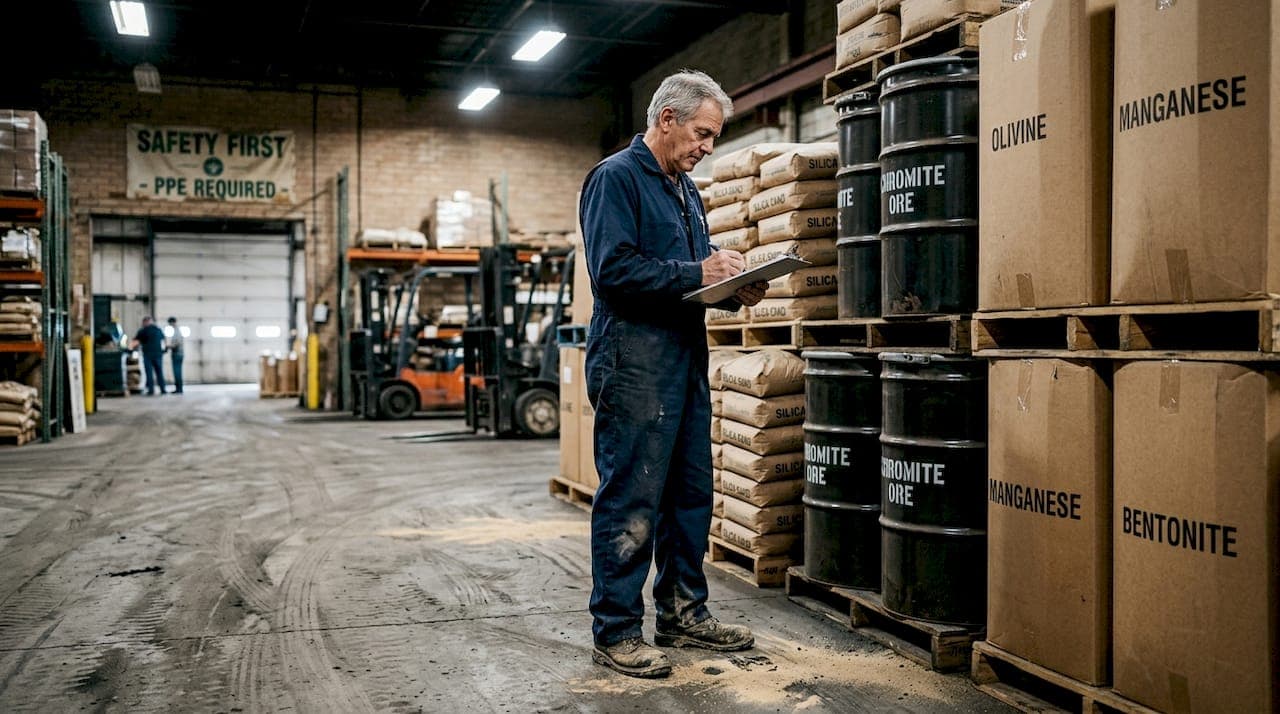
Selecting raw materials for foundries demands balancing thermal performance, mechanical properties, and procurement costs. Procurement managers face pressure to reduce expenses while maintaining casting quality and minimizing defects. The right combination of mold casting sands, refractory minerals, and binders directly impacts production efficiency and bottom-line profitability. This guide examines common foundry raw materials, compares their performance characteristics, and identifies cost-saving opportunities through reclaimed materials and strategic sourcing.
Table of Contents
- Key takeaways
- Key criteria for selecting raw materials in foundries
- Common casting sands and binders used in foundries
- Refractory minerals for high-temperature molds and cores
- Comparing raw material options: performance and cost
- Situational recommendations for foundry raw materials selection
- Explore cost-effective foundry materials with Borvanta
- Examples of raw materials for foundries - FAQ
Key Takeaways
| Point | Details |
|---|---|
| Grain size effects | Grain size affects surface finish and permeability with finer grains delivering smoother surfaces but lower gas escape and coarser grains improving permeability at the cost of molding detail. |
| Refractoriness matters | Refractoriness determines maximum safe temperatures and helps prevent mold breakdown and metal penetration during pouring. |
| Cost via reclaimed sands | Reclaimed sand can lower per ton costs while maintaining acceptable quality in high volume operations. |
| Sea coal benefits | Sea coal adds carbon at the mold interface creating a reducing atmosphere that reduces oxidation and improves surface finish. |
Key criteria for selecting raw materials in foundries
Grain size distribution fundamentally affects mold surface finish and permeability. Finer grains produce smoother casting surfaces but reduce gas escape, while coarser grains improve permeability at the cost of detail. Grain fineness AFS 50-150, permeability, refractoriness levels, and binder strength impact mold quality across different casting applications.
Refractoriness determines maximum safe operating temperatures for each material. Silica sand withstands approximately 1700°C before softening, chromite performs to 1960°C, and zircon maintains stability near 1850°C. Higher refractoriness prevents mold breakdown and metal penetration defects during pouring.
Binder selection influences mold strength, environmental impact, and reclamation potential. Clay-based systems like bentonite offer excellent reusability, while chemical binders provide superior strength for complex geometries. The industrial materials glossary explains technical terminology for procurement specifications.
Permeability and porosity control gas escape during metal solidification. Insufficient permeability traps gases, creating blowholes and porosity defects in finished castings. Testing these properties ensures consistent mold performance.
Cost optimization balances raw material expenses against defect rates and production volume. Reclaimed sand vs new sand casting demonstrates how recycled materials reduce per-ton costs while maintaining acceptable quality standards for high-volume operations.
Pro Tip: Calculate total cost per casting, not just raw material price. A premium refractory sand preventing one major defect per hundred castings often costs less than cheap silica requiring extensive rework.
Common casting sands and binders used in foundries
Green sand molds dominate iron and steel foundries due to their recyclability and low cost. Silica-based sands (85-99% silica), bentonite clay (4-10%), chemical resins (1-3%), and sea coal (2-10%) create the standard green sand mixture. Bentonite clay binds sand grains together when moistened, forming a cohesive mold that releases castings cleanly.
Chemically bonded sands use furan, phenolic, or urethane resins instead of clay. These systems cure at room temperature, producing harder molds with superior dimensional accuracy. Resin-coated sands combine convenience with strength, particularly for shell molding processes requiring thin, rigid molds.
Sea coal additives improve carbon content at the mold-metal interface. During pouring, sea coal combusts partially, creating a reducing atmosphere that prevents oxidation and improves surface finish. This carbonaceous material costs little but significantly reduces penetration defects.
Silica sand remains the most economical choice for general foundry work. However, silica sands can react and expand during casting when exposed to molten metal, causing veining defects and dimensional inaccuracies. Thermal expansion becomes problematic above 573°C when silica undergoes phase transformation.
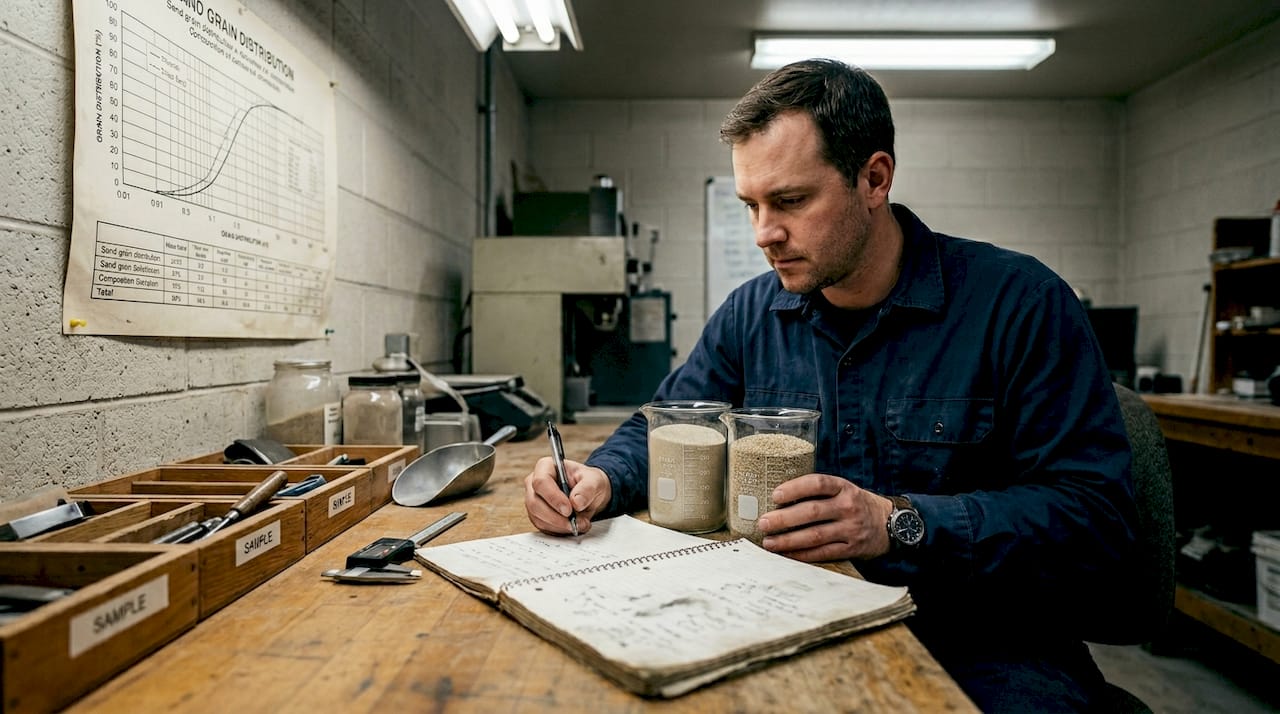
Binder selection requires matching chemistry to casting requirements. Sodium bentonite activates quickly but loses strength at high moisture, while calcium bentonite offers better hot strength. Organic binders eliminate clay-related defects but increase costs and complicate sand reclamation. The foundry sands overview details available options for different applications.
Pro Tip: Test binder performance with your specific sand source. Mineralogy variations between suppliers affect clay activation and resin bonding, so qualification testing prevents production surprises.
Refractory minerals for high-temperature molds and cores
Chromite sand excels in steel casting applications requiring maximum thermal stability. Chromite sand contains Cr2O3 ≥46%, melting point ≥2180°C and prevents metal penetration defects common with silica-based systems. Its low silica content eliminates thermal expansion issues while providing excellent chilling properties for directional solidification.
Zircon sand serves precision casting and manganese steel applications where silica reactivity causes defects. Zirconium silicate offers high density, low thermal expansion, and chemical inertness. Manganese alloys react aggressively with silica, making zircon the preferred facing sand despite higher costs.
Olivine, dunite, zircon offer high melting points for ladle sands and steel casting molds. Olivine provides good thermal conductivity and minimal reactivity with basic slags. Dunite, composed primarily of olivine mineral, delivers similar performance at potentially lower cost depending on regional availability.
| Material | Refractoriness | Primary use | Key advantage |
|---|---|---|---|
| Chromite | ≥2180°C | Steel facing sand | Low expansion, high chilling |
| Zircon | ≥1850°C | Manganese steel, precision | Chemical inertness |
| Olivine | ≥1700°C | Basic slag resistance | Thermal conductivity |
| Dunite | ≥1700°C | Steel backing sand | Cost-effective olivine source |
High-temperature minerals prevent casting defects caused by mold breakdown, metal penetration, and thermal stress. Strategic placement in mold faces maximizes performance while controlling material costs. Backing sands can use lower-cost materials where direct metal contact does not occur.
Selecting refractory minerals depends on casting alloy composition, pouring temperature, and mold complexity. Steel castings benefit from chromite facing, while aluminum and brass work well with silica. The current refractory stock shows available options for immediate procurement.
Pro Tip: Blend refractory sands with silica backing to optimize costs. Use premium materials only where thermal stress concentrates, typically within 25mm of the casting surface.
Comparing raw material options: performance and cost
Cost and thermal refractoriness create the fundamental trade-off in foundry sand selection. Silica sand costs $40-80 per ton new but risks thermal expansion defects above 573°C. Chromite and zircon command premium prices yet eliminate reaction-based defects in steel and manganese casting.
Reclaimed sand costs $1-8/ton with high recyclability compared to new sand pricing. Quality-controlled reclamation systems remove fines, restore grain shape, and adjust binder content to match virgin sand performance. High-volume foundries achieve 85-95% sand reclamation rates, dramatically reducing raw material expenses.
Chromite and zircon are pricier but reduce defects in steel and manganese casting applications. Defect reduction translates to lower scrap rates, reduced finishing labor, and improved delivery performance. Total cost analysis often favors premium materials despite higher unit prices.
| Material type | Cost range | Recyclability | Best application | Limitation |
|---|---|---|---|---|
| Reclaimed green sand | $1-8/ton | 85-95% | High-volume iron/steel | Requires processing equipment |
| New silica sand | $40-80/ton | 70-80% | General casting | Thermal expansion >573°C |
| Chromite sand | $200-400/ton | 60-70% | Steel facing sand | Higher initial cost |
| Zircon sand | $300-600/ton | 50-60% | Manganese steel, precision | Premium pricing |
Balance material choice by evaluating casting alloy requirements, production volume, and acceptable defect rates. Iron foundries running thousands of castings monthly justify reclamation investment, while low-volume specialty operations may purchase virgin sand as needed. Check foundry sands for current market availability and pricing.
Defect tolerance varies by casting application. Structural components demand minimal porosity and dimensional accuracy, justifying premium materials. Rough castings destined for heavy machining tolerate more variation, allowing cost-optimized material selection.
Situational recommendations for foundry raw materials selection
Reclaimed green sand for high-volume iron/steel foundries delivers maximum cost efficiency when processing equipment and quality controls are in place. Invest in mechanical reclamation, thermal treatment, or wet processing depending on binder system and production scale. Monitor moisture content, compactability, and grain size distribution to maintain consistent mold properties.
Chromite sand recommended for steel/manganese molds facing prevents penetration defects and thermal stress cracking. Apply chromite in a 25-50mm facing layer backed with reclaimed silica to optimize material costs. This hybrid approach concentrates premium materials where thermal stress peaks.
Regularly test sand properties to maintain process control. Measure moisture every shift, compressive strength daily, and grain fineness weekly. Statistical process control identifies trends before they cause casting defects, reducing scrap and rework expenses.
Consider eco-friendly inorganic binders for sustainable operations and easier reclamation. Sodium silicate and phosphate binders offer lower emissions than organic resins while maintaining adequate mold strength. Regulatory pressure and customer sustainability requirements increasingly favor these systems.
Tailor raw material choices to specific casting requirements:
- Identify casting alloy and pouring temperature to determine minimum refractoriness
- Calculate production volume to justify reclamation equipment investment
- Evaluate complexity and tolerance requirements for binder system selection
- Compare total cost per casting including materials, labor, and scrap rates
- Source materials strategically using surplus inventory and spot market opportunities
Pro Tip: Maintain relationships with multiple sand suppliers to access spot market deals and surplus inventory. Price volatility creates periodic opportunities for significant savings on premium materials. Visit foundry procurement support for sourcing assistance.
Explore cost-effective foundry materials with Borvanta
Sourcing foundry raw materials at competitive prices requires access to surplus inventory and one-off stock opportunities. Borvanta specializes in below-market industrial raw materials offers connecting procurement managers with cost-effective alternatives to standard supplier channels.
Current inventory includes silica sands, chromite, zircon, and various binder systems available for immediate delivery across Europe. These foundry sands offers represent surplus stock from manufacturers and distributors, priced below typical market rates for quality-conscious buyers.
Refractory minerals for high-temperature applications appear periodically in available inventory. Browse refractory minerals offers to identify current opportunities matching your casting requirements and procurement timeline.
Procurement support helps you evaluate material specifications, arrange sampling, and coordinate logistics. Technical data sheets and quality documentation accompany each listing, enabling informed purchasing decisions. Access these resources to reduce raw material costs while maintaining casting quality and production efficiency.
Examples of raw materials for foundries - FAQ
What are the most cost-effective raw materials for steel foundries?
Reclaimed green sand provides the lowest per-ton cost at $1-8 compared to new silica at $40-80 per ton. For facing sands in steel casting, chromite offers the best balance of thermal performance and defect prevention despite higher upfront costs. Total cost per casting, including scrap reduction, often favors chromite facing with reclaimed silica backing.
How does reclaimed sand compare quality-wise with new sand?
Properly processed reclaimed sand matches virgin sand performance in strength, permeability, and surface finish. Quality control requires monitoring grain size distribution, removing fines, and adjusting binder content. High-volume foundries achieve 85-95% reclamation rates while maintaining casting quality equivalent to new sand systems.
When should chromite sand be preferred over silica sand?
Chromite becomes essential for steel castings above 1500°C pouring temperature where silica expansion causes veining defects. Manganese steel applications also require chromite or zircon due to aggressive silica reactions. Use chromite facing sand backed with silica to optimize costs while preventing thermal stress defects.
What binders are commonly used with foundry sands?
Bentonite clay dominates green sand systems due to recyclability and low cost. Chemical binders including furan, phenolic, and urethane resins provide superior strength for complex geometries. Sodium silicate offers an eco-friendly alternative with lower emissions and easier reclamation than organic binders.
Where to find European suppliers of refractory minerals?
Borvanta operates from Riga, Latvia, serving foundries across the Baltic region and Europe with surplus refractory minerals and casting sands. The platform provides access to below-market inventory, technical specifications, and procurement support for cost-conscious buyers seeking quality materials.