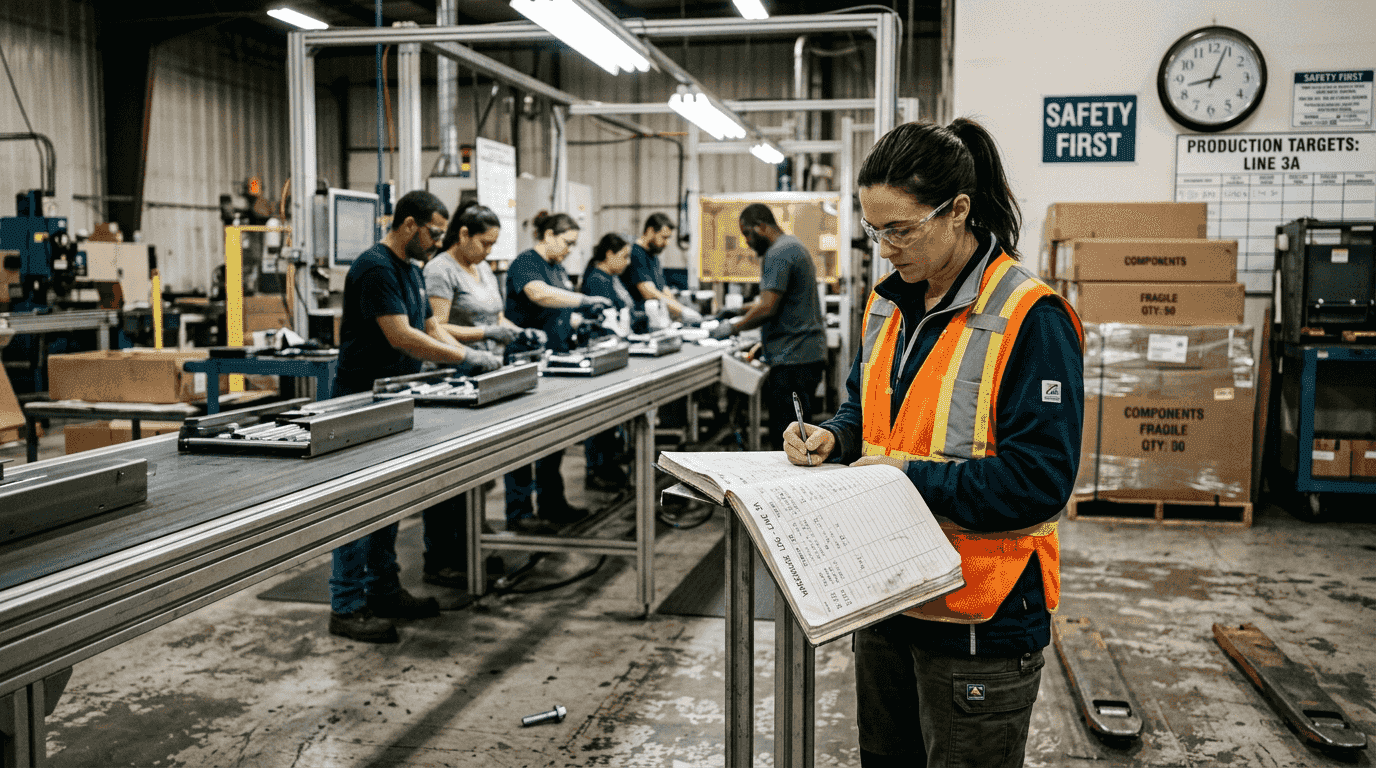
Most manufacturing managers focus on optimizing machines and labor when seeking productivity gains. Yet a factory with the best equipment and skilled workers can grind to a halt without the right materials at the right time. Material availability shapes production flow, cost control, and competitive positioning in ways that often go unnoticed until a shortage strikes. This guide explores how industrial materials supply timing and consistency directly influence manufacturing efficiency and bottom-line costs.
Table of Contents
- How Material Availability Affects Production Efficiency
- Impact Of Material Availability On Production Cost Management
- Strategies To Mitigate Risks Of Material Unavailability
- Comparing Just-In-Time And Safety Stock Approaches In Material Management
- Optimize Your Materials Supply With Borvanta Materials
- Frequently Asked Questions
Key takeaways
| Point | Details |
|---|---|
| Material availability drives efficiency | Timely supply prevents downtime and keeps production flowing smoothly. |
| Supply gaps increase costs | Shortages trigger overtime, expedited shipping, and lost revenue from missed deliveries. |
| Strategic inventory balances risk | Effective planning reduces emergency purchases while avoiding excess stock. |
| Supplier relationships matter | Diversified sourcing and communication improve reliability and reduce disruption. |
| Different strategies suit different needs | Just-in-time and safety stock approaches each offer unique trade-offs for manufacturers. |
How material availability affects production efficiency
Production lines operate on precise schedules. When materials arrive on time, machines run continuously, workers stay productive, and output targets get met. But when material shortages cause significant production delays, reducing overall efficiency, the entire workflow suffers. Equipment sits idle, labor hours get wasted, and throughput drops.
Unplanned stoppages create cascading problems. A missing component forces workers to switch tasks or wait. Machines designed for continuous operation lose thermal equilibrium or require recalibration after cooling. Restart procedures consume time and energy without producing finished goods.
Schedule disruptions ripple through the entire facility. When one production stage stops, downstream processes either halt or switch to alternative tasks, creating inefficiencies across multiple departments. Coordination becomes harder, and managers spend valuable time firefighting instead of improving processes.
Material scarcity lowers efficiency in several measurable ways:
- Machine idle time increases when inputs run out before scheduled maintenance windows
- Changeover frequency rises as production switches between available materials rather than following optimal sequences
- Overtime becomes necessary to catch up on delayed orders, reducing per-unit labor productivity
- Quality control challenges emerge when substitute materials require process adjustments
- Planning accuracy declines as uncertainty forces conservative scheduling
Consistent industrial materials supply enables smooth production flow. Manufacturers can optimize batch sizes, minimize changeovers, and maintain steady output rates. Workers develop rhythm and expertise on consistent processes. Equipment operates within designed parameters, reducing wear and maintenance needs.
Real-time visibility into material status helps production planners make better decisions. Knowing exactly when inputs will arrive allows precise scheduling of labor, equipment, and shipping. This coordination maximizes asset utilization and minimizes waste.
"A production line is only as reliable as its weakest supply link. Material availability determines whether schedules become reality or wishful thinking."
Smaller manufacturers face particular challenges. Without massive purchasing power, they may struggle to secure priority treatment from suppliers during shortages. Building buffer inventory helps, but ties up working capital that growing businesses need for other investments.
Impact of material availability on production cost management
Material supply inconsistency drives costs up through multiple channels. When delays due to poor material management increase overhead and labor costs substantially, profit margins shrink quickly. Emergency responses to shortages almost always cost more than planned procurement.

Overtime labor represents one immediate cost spike. When materials arrive late, manufacturers often pay premium wages to make up lost production time. Workers earn time-and-a-half or double pay, while per-unit labor costs jump 50 to 100 percent during rush periods.
Expedited shipping adds another layer of expense. Standard freight rates give way to express delivery charges that can triple or quadruple transportation costs. Air freight for heavy industrial materials becomes prohibitively expensive but sometimes unavoidable to prevent production shutdowns.
Lost sales create opportunity costs that hurt even more. Missing delivery commitments damages customer relationships and opens doors for competitors. Contractual penalties for late delivery directly reduce revenue, while long-term reputation damage makes future sales harder to secure.
Inventory carrying costs rise when manufacturers try to buffer against uncertainty. Holding extra safety stock ties up warehouse space, increases insurance premiums, and locks working capital in materials that might become obsolete. Yet inadequate buffers leave production vulnerable to disruption.
Budgeting becomes nearly impossible with unpredictable material availability. Finance teams struggle to forecast costs when procurement expenses vary wildly month to month. This uncertainty makes it harder to price products competitively while maintaining healthy margins.
Key cost factors driven by material availability challenges include:
- Premium pricing for rush orders when regular suppliers cannot deliver on time
- Increased scrap rates when unfamiliar substitute materials require process adjustments
- Higher quality control costs to verify alternative materials meet specifications
- Administrative overhead from emergency procurement and schedule revisions
- Customer retention expenses to repair relationships damaged by delivery failures
Pro Tip: Track total cost of ownership for materials, not just purchase price. Include carrying costs, shortage penalties, and quality impacts. This complete picture helps you invest appropriately in reliable industrial materials supply relationships that actually reduce overall expenses.
Smaller manufacturers often lack negotiating leverage for favorable payment terms. When forced to pay upfront for materials while customers demand extended payment windows, cash flow becomes strained. Reliable suppliers who understand these challenges and offer reasonable terms become invaluable partners.
Strategies to mitigate risks of material unavailability
Manufacturing managers can take concrete steps to improve material availability and reduce negative impacts. Proactive supplier engagement and diversified sourcing improve material availability while building resilience against disruptions.
-
Improve demand forecasting accuracy by analyzing historical production data and customer order patterns. Better predictions enable more precise material ordering that balances availability with inventory costs. Use rolling forecasts that update weekly or monthly rather than static annual plans.
-
Diversify your supplier base to avoid single points of failure. Identify at least two qualified sources for critical materials. Build relationships before emergencies strike, so alternative suppliers understand your specifications and quality requirements.
-
Optimize safety stock levels using statistical analysis of lead time variability and demand fluctuation. Too little buffer leaves you vulnerable, while excess inventory wastes capital. Calculate reorder points that account for supplier reliability and production volatility.
-
Implement real-time inventory tracking systems that provide visibility into current stock levels and incoming shipments. Automated alerts when materials reach reorder points prevent last-minute scrambles. Digital systems reduce manual counting errors and improve accuracy.
-
Establish regular communication cadences with key suppliers. Weekly or biweekly check-ins help identify potential delays early, giving you time to adjust production schedules or secure alternatives. Strong relationships often mean suppliers prioritize your orders during tight supply periods.
-
Develop contingency plans for critical materials by identifying acceptable substitutes and documenting process adjustments needed. Test alternatives during normal operations so you know exactly what changes production requires if primary materials become unavailable.
Pro Tip: Create an early warning system by monitoring supplier lead times, industry news, and economic indicators that might signal future shortages. When you spot trouble brewing, increase safety stock temporarily or lock in supply agreements before competitors react. This proactive approach costs less than emergency responses.
Collaborative planning with suppliers yields mutual benefits. Share your production forecasts so suppliers can plan their operations more effectively. In return, ask for visibility into their capacity constraints and potential bottlenecks. This transparency helps both parties avoid surprises.
Smaller manufacturers should leverage their agility advantages. While you may lack purchasing power, you can often adjust production schedules more quickly than large competitors. Build relationships with industrial materials supply partners who value flexibility and responsiveness over pure volume.
Comparing just-in-time and safety stock approaches in material management
Manufacturers face a fundamental choice between lean just-in-time sourcing and maintaining protective safety stock. Different inventory strategies impact production resilience and cost in unique ways, with no single approach working best for all situations.
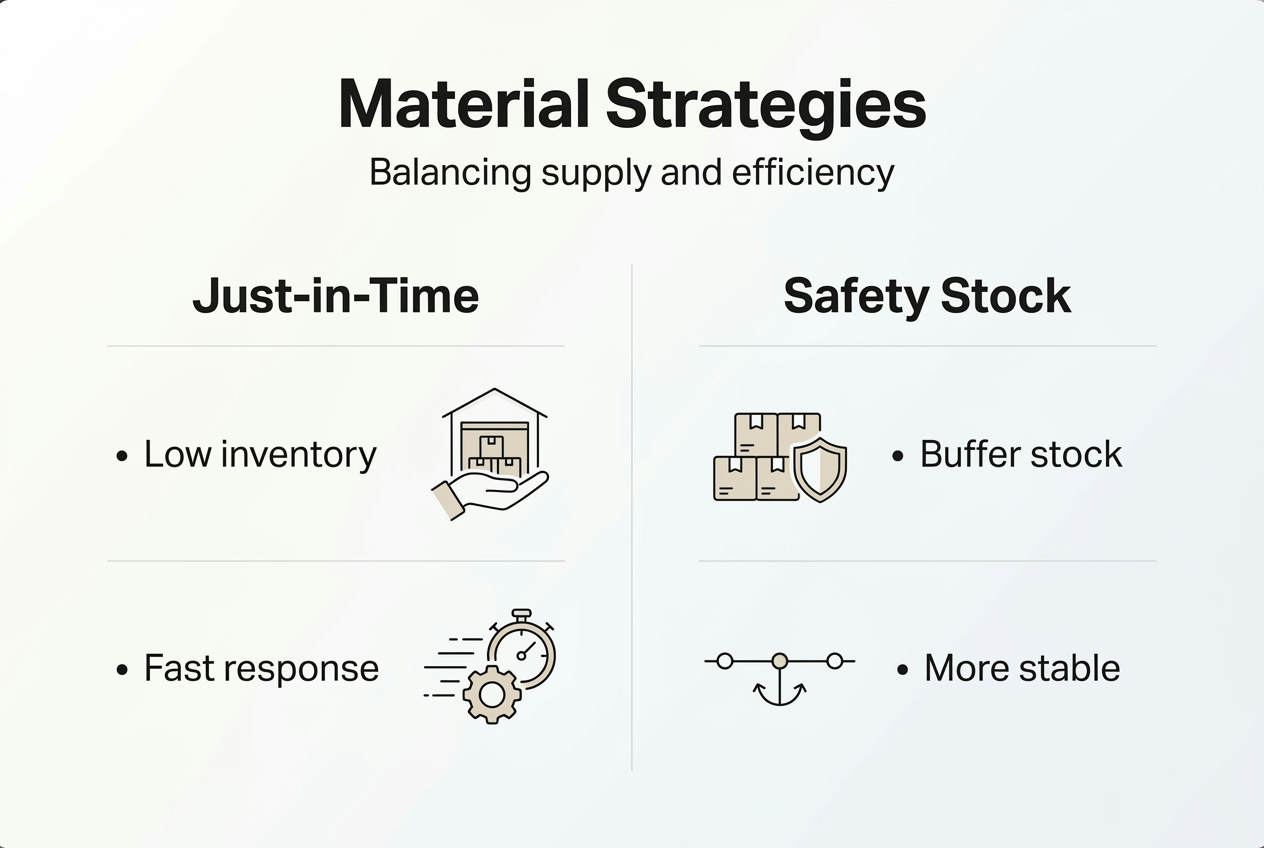
Just-in-time inventory minimizes holding costs by ordering materials to arrive exactly when needed for production. This approach reduces warehouse requirements, lowers carrying costs, and frees working capital. However, it demands extremely reliable suppliers and leaves little margin for error.
Safety stock maintains buffer inventory above immediate production needs to protect against supply disruptions or demand spikes. This strategy increases resilience but ties up capital in materials sitting idle. The key question becomes how much buffer justifies the cost and risk trade-off.
| Factor | Just-in-Time | Safety Stock |
|---|---|---|
| Inventory carrying costs | Minimal, reducing working capital needs | Higher, tying up funds in buffer materials |
| Supply disruption risk | Vulnerable to delays, requiring perfect supplier reliability | Protected against most short-term interruptions |
| Warehouse requirements | Smaller footprint, lower facility costs | Larger storage space and handling equipment needed |
| Supplier relationship demands | Requires exceptional coordination and performance | More forgiving of occasional delays |
| Best for | Stable demand, reliable suppliers, high-value materials | Volatile demand, uncertain supply, critical production inputs |
Choosing the right approach depends on several factors:
- Material criticality: safety stock makes sense for components that would halt production entirely if unavailable
- Supplier reliability: consistent delivery enables just-in-time, while unreliable sources demand buffers
- Demand predictability: stable orders suit lean inventory, while variable demand benefits from safety stock
- Material cost and shelf life: expensive or perishable items favor just-in-time ordering
- Production flexibility: processes that can easily switch materials work well with minimal inventory
Many manufacturers adopt hybrid approaches. They use just-in-time for commodity materials with multiple suppliers while maintaining safety stock for specialized inputs with long lead times or single sources. This balanced strategy optimizes working capital while protecting critical production paths.
Smaller manufacturers often benefit more from modest safety stock than pure just-in-time systems. Without the purchasing volume to demand perfect supplier performance, maintaining buffers provides insurance against disruptions. The key is calculating optimal buffer levels that balance protection against cost.
Regularly review your inventory strategy as conditions change. Supplier reliability, lead times, and demand patterns shift over time. What worked last year may not suit current circumstances. Quarterly assessments help you adjust safety stock levels and ordering patterns to match evolving business conditions.
Optimize your materials supply with Borvanta Materials
Managing material availability challenges requires reliable partners who understand manufacturing realities. Borvanta Materials provides industrial materials supply solutions tailored for European manufacturers seeking competitive pricing and dependable delivery.
Our extensive product catalog covers refractory minerals, industrial sands, steel materials like steel sheets 10mm, polymers, and other essential manufacturing inputs. We help small and mid-sized businesses access materials at rates typically 30 to 40 percent below market averages.
Experienced support teams work with you to optimize inventory levels and reduce downtime risks. We understand the cost pressures facing growing manufacturers and structure supply agreements that balance reliability with working capital efficiency. Straightforward commercial terms and practical delivery options help you maintain production flow without excessive inventory investment.
Frequently asked questions
Why is material availability crucial for small and mid-sized manufacturing businesses?
Smaller manufacturers lack the purchasing power and inventory buffers that large corporations use to weather supply disruptions. A single material shortage can idle an entire facility, creating costs that devastate tight margins. Reliable material availability enables smaller businesses to compete on delivery performance and quality rather than just accepting whatever larger competitors leave behind.
How do material shortages directly increase production costs?
Shortages trigger multiple cost spikes simultaneously. Overtime labor to catch up on delayed production typically costs 50 to 100 percent more per hour than regular wages. Expedited shipping can triple or quadruple freight expenses. Lost sales from missed deliveries damage customer relationships and reduce future revenue opportunities while contractual penalties directly reduce current income.
What inventory level balances availability against carrying costs?
Optimal inventory depends on material criticality, supplier reliability, and demand variability. Calculate safety stock using lead time uncertainty and consumption rate fluctuation. Start with enough buffer to cover typical delays plus one standard deviation of demand variation. Monitor actual stockout frequency and adjust levels quarterly based on real performance data rather than theoretical calculations.
How can manufacturers improve supplier reliability for critical materials?
Build relationships before crises strike through regular communication and transparency about production forecasts. Diversify sourcing to avoid single points of failure while maintaining meaningful volume with each supplier. Pay invoices promptly to establish goodwill that often translates to priority treatment during tight supply periods. Visit supplier facilities when possible to understand their capabilities and constraints firsthand.
When should manufacturers choose just-in-time versus safety stock strategies?
Use just-in-time for commodity materials with multiple reliable suppliers, stable demand, and low criticality to production. Maintain safety stock for specialized inputs with long lead times, single sources, or components that would halt production entirely if unavailable. Most manufacturers benefit from hybrid approaches that apply different strategies to different material categories based on specific risk and cost profiles.